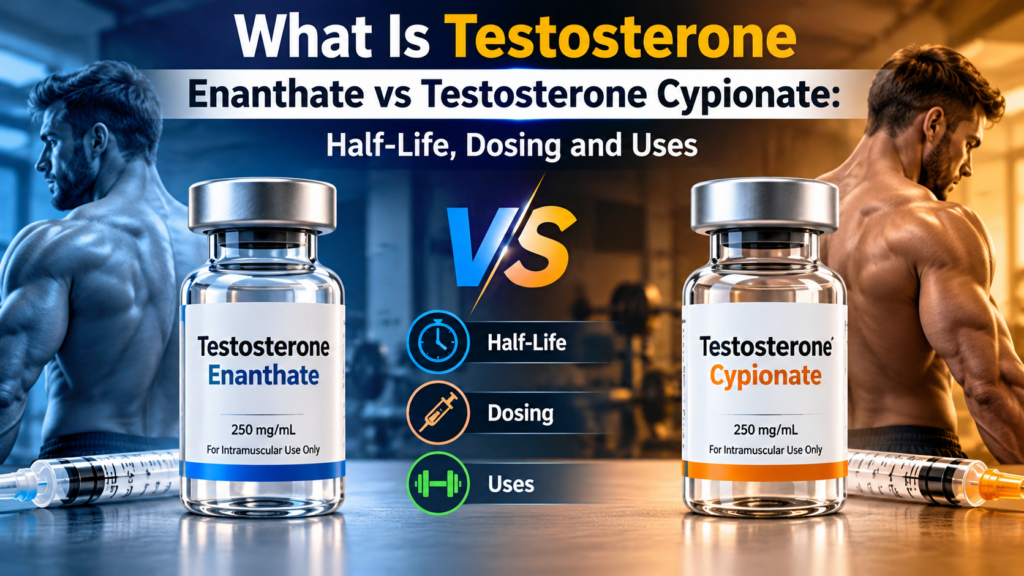
Testosterone enanthate and testosterone cypionate are the two most prescribed injectable forms of testosterone. They work in almost the same way. Almost. So if you’ve been put on testosterone replacement therapy (TRT), you’ve probably wondered: what is testosterone enanthate, and how is it any different from testosterone cypionate? Good question. This guide breaks down their half-life, dosing, uses and side effects in plain language, so your next talk with your doctor goes a little easier.
What Is Testosterone Enanthate?
Testosterone enanthate is a synthetic version of testosterone, the main male hormone. It’s attached to an ester called enanthic acid (heptanoic acid). Why does that matter? The ester slows down how fast the hormone leaves the injection site. So one shot last for days, not hours.
It was first developed back in the 1950s. Brand names include Delatestryl and Xyosted, a weekly under-the-skin auto-injector sold in the US. Most products uses sesame oil as the carrier. Outside the United States — Europe, Asia and lots of other places — it’s the go-to injectable testosterone.
What Is Testosterone Cypionate?
What is Testosterone cypionate? Is the exact same testosterone molecule. The difference? It’s bonded to a slightly longer ester, cyclopentylpropionic acid. That ester is a bit heavier, so the hormone releases into the bloodstream a little more slower.
You’ll mostly see it sold as Depo-Testosterone, plus plenty of generics. Usually in cottonseed oil. In the United States testosterone cypionate is the most commonly prescribed injectable testosterone. That’s why so many American patients know it better than enanthate.
Half-Life: Enanthate vs Cypionate
Half-life is the main technical difference between the two. And honestly, it’s small. Cypionate stays in the body roughly one to three days longer than enanthate.
| Feature | Testosterone Enanthate | Testosterone Cypionate |
| Ester | Enanthate (7 carbons) | Cypionate (8 carbons) |
| Approximate half-life | About 4.5–7 days | About 8 days |
| Peak level after injection | About 1–3 days | About 2–5 days |
| Common carrier oil | Sesame oil | Cottonseed oil |
| Most popular in | Europe, Asia, worldwide | United States |
Keep in mind these half-life figures are approximate. They vary between studies, and between people too. In real life? Most patients don’t feel much difference at all.
Dosing
Dosing for both is almost identical. Why? Each milligram carries nearly the same amount of actual testosterone. Still, only a licensed doctor should set your dose — based on blood tests, symptoms and your health history.
For intramuscular injections, the official prescribing labels for both drugs list a range of 50–400 mg every 2–4 weeks for hypogonadism. That’s the label. In everyday TRT practice though, alot of doctors now prefer smaller doses given weekly or every 10 days. Shorter gaps means steadier hormone levels. Fewer of those “highs and lows” in mood and energy that can follow one big dose every few weeks.
Expect blood work. Your doctor will usually check testosterone levels, blood count (hematocrit) and a few other markers some weeks after starting, then regularly after that. And please — never change your dose or schedule on your own.
Medical Uses
Testosterone enanthate and testosterone cypionate are both prescription medicines. Same job, same conditions:
- Male hypogonadism: low testosterone caused by problems with the testes or the pituitary gland, which can lead to fatigue, low sex drive, loss of muscle, and low mood.
- Delayed puberty: in selected teenage boys, under a specialist’s care.
- Gender-affirming hormone therapy: for transgender men and some non-binary people.
- Certain breast cancers: enanthate has occasionally been used in some women with specific types of breast cancer, though this is rare today.
One more thing. In many countries, the US included, testosterone is a controlled substance. Using it without a prescription is illegal. Its also risky.
Side Effects and Safety
Same hormone, same side effects. Simple as that. The common ones are acne, oily skin, pain or swelling where you inject, fluid retention and mood changes.
The more serious risks need regular monitoring by a doctor. These include a high red blood cell count (which can thicken the blood), lower sperm count and fertility, breast tenderness or growth, worse sleep apnea and changes in cholesterol. People with prostate or breast cancer, or certain heart conditions, may not be able to use testosterone at all. That’s a big deal.
A rare difference? The oil. Some people are allergic to sesame oil, which is in many enanthate products, or to cottonseed oil, found in cypionate. In that case switching forms can really help.
Which One Is Better?
Short answer: neither. At the same dose they’re close to interchangeable. The choice usually comes down to practical stuff — what’s available and affordable in your country, what your insurance covers, which carrier oil you tolerate and your doctor’s experience. Doctors often switches patients from one to the other without even changing the dose.
Frequently Asked Questions
What is testosterone enanthate used for?
Mainly low testosterone (hypogonadism) in men. Its also used for delayed puberty and in gender-affirming hormone therapy.
Is testosterone cypionate stronger than enanthate?
Nope. Milligram for milligram, they deliver almost the same amount of testosterone. Cypionate just hangs around a little longer.
Can I switch from testosterone cypionate to enanthate?
Yes. Many patients switch between them at the same dose. But only with a doctor’s guidance and follow-up blood tests.
How often are these injections given?
It depends on your doctor’s plan. Commonly every 1 to 2 weeks. Some schedules uses smaller, more frequent doses for steadier levels.
Do they need a prescription?
Absolutely. Both are prescription-only medicines, and in many countries they’re controlled substances as well.
Conclusion
So, what is testosterone enanthate compared with testosterone cypionate? Pretty much the same thing. Both are long-acting injectable forms of the same hormone, with nearly identical dosing, uses and side effects. The main difference is half-life: about 8 days for cypionate versus roughly 4.5–7 days for enanthate. Add in the carrier oil and where you live, and thats basically it. For most people the best choice is the one there doctor recommends and they can reliably get. Bottom line? Only use testosterone with a prescription and regular check-ups.
This article is for general information only and is not medical advice. Talk to a qualified healthcare provider before starting, stopping, or changing any hormone treatment.