Hospitals are strange places when you really think about them.
They’re loud, but quiet at the same time. Full of people, yet somehow lonely. And inside them, tucked away behind heavy doors and warning signs, is the cath lab. Most patients never really understand what happens in there. They just know it’s important.
And that’s where the cath lab tech works.
Not in the spotlight. Not giving speeches. Just doing the work. Day after day. Sometimes calm. Sometimes intense. Sometimes emotionally heavy… and sometimes just routine, almost boring. But never meaningless.
So, what exactly is a cath lab tech?
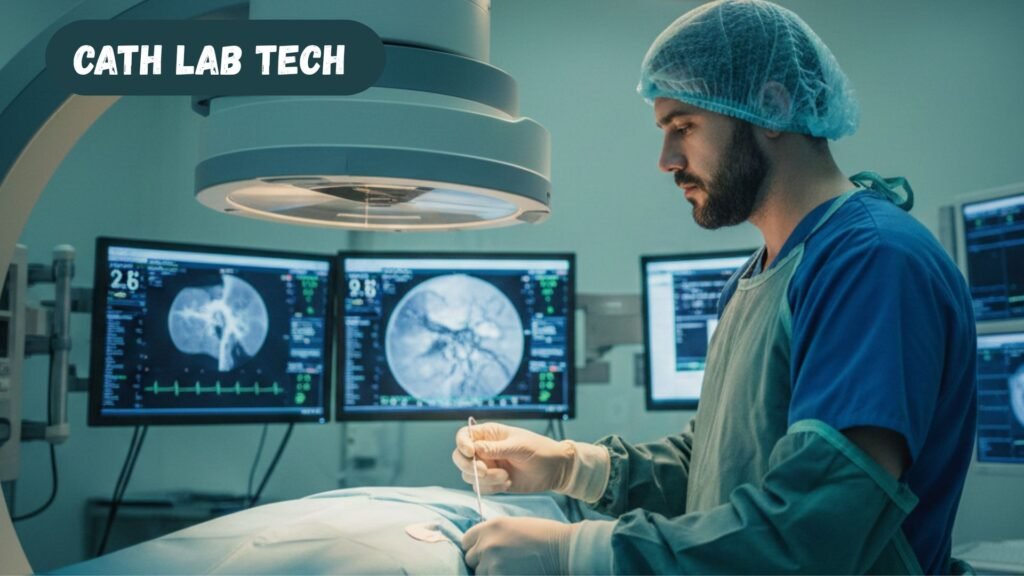
A cath lab tech works in the cardiac catheterization laboratory, a specialized area where doctors diagnose and treat heart and blood vessel problems using thin tubes, imaging, and technology instead of major surgery.
The job isn’t theoretical. It’s hands-on. Real-time. You’re there when it matters.
People researching this career usually come across the term cath lab tech while trying to understand how cardiac procedures actually happen behind the scenes.
And behind the scenes is where this role lives.
What does a cath lab tech actually do all day?
Short answer? A lot.
Long answer? It depends on the day, the hospital, and the patient.
Some days are smooth. Others feel like controlled chaos.
Typical responsibilities include:
-
Preparing patients before procedures
-
Checking equipment (again… and again)
-
Setting up sterile trays and catheters
-
Running imaging systems during procedures
-
Watching heart rhythms and blood pressure closely
-
Assisting cardiologists when they need tools — fast
-
Cleaning, resetting, and starting over for the next case
And yes, sometimes you don’t sit for hours. Sometimes lunch happens late. Sometimes not at all.
That’s just how it goes.
Procedures inside the cath lab
This isn’t general patient care. These are invasive, precise procedures. Small movements. Big consequences.
Cath lab techs commonly assist with:
-
Cardiac catheterization
-
Coronary angiograms
-
Balloon angioplasty
-
Stent placement
-
Pacemaker insertions
-
ICD (defibrillator) procedures
-
Electrophysiology (EP) studies
-
Peripheral vascular procedures
You learn to move efficiently. To anticipate what the doctor needs before they ask. To stay focused even when the room feels tense.
Skills that matter more than a perfect résumé
Degrees help. Certifications help. But they’re not everything.
Some of the best cath lab techs aren’t the loudest or the most confident. They’re the ones who stay steady.
Important skills include:
-
Attention to tiny details
-
Staying calm under pressure
-
Quick problem-solving
-
Clear communication
-
Physical endurance
-
Emotional control
And patience. Because machines fail. Procedures run long. Outcomes aren’t always good.
That part doesn’t get talked about much.
Education and training (there’s more than one way in)
There isn’t a single straight road to becoming a cath lab tech. And that’s actually a good thing.
Common entry paths:
-
Associate degree in Cardiovascular Technology
-
Radiologic Technology programs
-
Nursing background (some labs hire RNs as techs)
-
Specialized cath lab certificate programs
Common certifications:
-
RCIS (Registered Cardiovascular Invasive Specialist)
-
ARRT (for imaging-focused roles)
-
BLS and ACLS
Some techs start in radiology. Others move from echo or nursing. Many learn a lot on the job. Real learning happens in the lab, not just the classroom.
How this role compares to other cardiac jobs
People often mix these roles up. Understandably so. They work closely together.
Here’s a simple breakdown.
| Role | Main Focus | What They Mostly Do |
|---|---|---|
| Cath Lab Tech | Invasive heart procedures | Imaging, monitoring, assisting |
| Cardiac Nurse | Patient care | Meds, recovery, assessments |
| Radiologic Tech | Imaging | X-rays, fluoroscopy |
| CVT | Diagnostics | Echo, stress tests |
Sometimes roles overlap. In smaller hospitals, they overlap a lot. Flexibility is common.
The work environment (honest version)
Cath labs are not relaxed spaces.
You’ll be:
-
Standing for long periods
-
Wearing heavy lead aprons
-
Working with radiation (safely, but still)
-
On-call some nights or weekends
But there’s also teamwork. Real teamwork. A shared focus. A sense that everyone in the room matters.
When a procedure goes well, there’s a quiet relief. Not celebration. Just relief.
Pay, growth, and the future
Salaries vary. A lot. Location, experience, certifications — they all matter.
But overall:
-
Pay is competitive
-
Demand is steady
-
Career growth exists
Some cath lab techs move into:
-
Senior or lead technologist roles
-
EP or vascular specialization
-
Management or education
-
Equipment or device training
Others stay right where they are. And that’s okay too.
Pros and cons (no sugarcoating)
Pros:
-
Meaningful work
-
Strong demand
-
Good income potential
-
Hands-on role
-
Team-based environment
Cons:
-
Stressful situations
-
Long procedures
-
Physical strain
-
On-call shifts
-
Emotional fatigue
It’s not for everyone. And that’s fine.
Is this the right path for you?
Ask yourself honestly:
-
Can I stay calm when things go wrong?
-
Am I okay with pressure?
-
Do I like technical, hands-on work?
-
Do I want a career that actually impacts lives?
If yes… this role might fit.
Final thoughts (not a perfect ending)
Being a cath lab tech isn’t glamorous. There’s no applause. No dramatic speeches.
Just steady hands. Focused eyes. And work that matters.
Sometimes that’s enough.