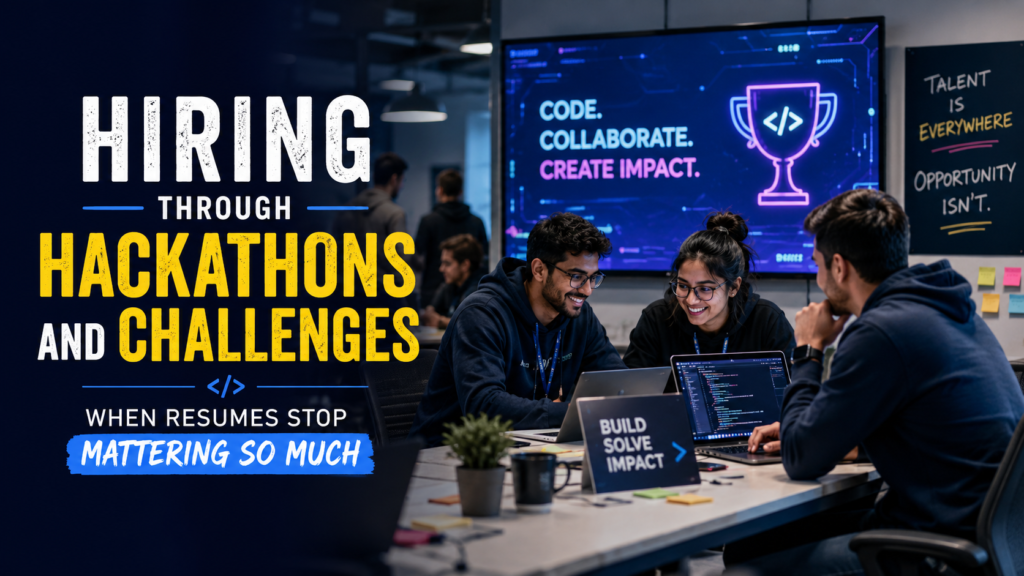
For a really long time, hiring process of an organization followed a predictable pattern or a routine to say, Post a job, collect resumes, scanned degrees, check background and perform interviews, and then you can only hope that you made a right choice and sometimes you did, but often times the hiring decisions made turned out to be wrong.An organization who hires developers on a constant basis, knows this feeling that on papers the skills and experience looks perfect but when it comes to real work, professionals always falter.
That gap between what people say they can do and what they actually can do is where hackathons and skill challenges quietly entered the picture.
Hiring developers through hackathons is not a trend, it’s not a marketing stunt, it’s a practical solution.
Why Resumes Started Losing Their Power
Let’s be honest, most resumes today look the same. The use of similar words like resilient, hardworking proficient is not something new and out of the box, and with the help of AI tools, LinkedIn profiles and templates, it’s easier than ever to make yourself look impressive without showing much proof.
The clutch here is that recruiters also know this, they know half of what they read is exaggerated. Sometimes more than half, but they still have to rely on it because what else do you use? Until recently, there wasn’t a better option.
Then Came Hackathons and Challenges
Somewhere along the way, companies started experimenting, instead of asking candidates to talk about skills and experience. So they organized hackathons or coding challenges or design sprints or problem-solving contests. The way these things work is that people join these hackathons, build things, worry about solving real problems, and ultimately showcasing their actual skills to the recruiters, which makes hiring managers notice them, and see their talent, no false promise, no buzzwords, just real work and talent.
What This Looks Like in Practice
Let’s say a company needs developers so instead of running five interview rounds, they organize a weekend challenge, providing participants with a bunch of problems for them to solve, like build a basic product recommendation system or create a small fintech dashboard or design a logistics optimization model.
Participants will have to work under a time limit, like 24 – 48 hours, and in those hours they code, they design, they debug and they struggle, just like how they will work in a real workplace.
After all this hard work and hours of work they present, the eyes of hiring managers are wide open at this point, they are observing everything from who is taking initiative, who is good at collaborating, who is panicking a lot and who is the best at adapting. By doing this, you will assess a candidate’s skills set in more than 10 interview rounds.
Why Companies Are Moving This Way
This shift isn’t random, It’s happening because traditional hiring is expensive and unreliable. Here are some real reasons companies like challenges:
They Reduce Guesswork – The reason why companies are moving this way is because this way does not assume if something is good or not, you see it, you experience it.
They Save Time – Just by hosting one event, an organization can save days of work and dozens of interviews, saving resources.
They Reveal Soft Skills – These events reveal not just technical skills of a person, it also reveals their collaborative efforts, communication, leadership quality and stress management, which resumes don’t showcase.
They Attract Serious Candidates – Only motivated people participate. Casual applicants drop out early.
They Improve Employer Branding – People talk about good hackathons. It builds reputation.
From the Candidate’s Perspective
Now let’s talk about the other side, for many job seekers, traditional hiring feels unfair, many skilled people lose the opportunity because of multiple factors like not being a good enough university, the last company isn’t that big, or your resume isn’t polished, and because of these reasons they get ignored.
Hackathons change that, they level the field for everyone, Candidates are allowed to showcase their best and nobody cares where your studies or how polished your resume is, they only care if you are able to build, which is a powerful thing. Many people get their first real opportunity this way, not through connections, not through references, through performance.
What Participants Actually Experience
A lot of people who actually love coding or developing look at hackathons as fun coding parties, but reality is different, these hackathons are intense, you get tired, you get stuck and your code breaks, teammates disappear but you still have to deliver, it becomes stressful. This is where talent assessment tools prove to be a better option.
But that’s why companies love it, because that’s work, pressure of working under a deadline, uncertainty is a part of a job. You see how someone behaves when things go wrong. That’s more valuable than any interview answer.
Not Just for Tech Anymore
At first, this model was mostly for developers, but now it’s spreading.
Companies run challenges for:
- Data analysts
- Product managers
- Designers
- Marketers
- Operations specialists
Platforms and Ecosystems Around This
Over time, entire ecosystems have formed around this concept. Online platforms host challenges, universities partner with companies, communities organize events. Some events are open to everyone, some are invites only, some are global and some are local. But at the end all serve the same purpose, finding people who can actually do the job
The Hidden Benefits for Companies
Beyond hiring, these events offer unexpected value. Companies get fresh ideas, new perspectives, prototype solutions, and user feedback.
Sometimes, a team builds something better than the company’s internal version. That happens more than people admit. So even if nobody gets hired, the company still wins.
But There Are Problems Too
This system isn’t perfect, It’s far from it, there are multiple risks from both ends, here are some drawback of the activity:
Burnout Risk – Some events demand extreme hours, and not everyone can afford that. It can be favorable to people with fewer responsibilities.
Accessibility Issues – Not everyone has fast internet, good devices, or free weekends. Talent can still be excluded.
Exploitation Concerns –Sometimes companies collect ideas without hiring anyone. That leaves a bad taste. Good organizations try to avoid this. Bad ones don’t.
Why This Model Fits the Future of Work
This model of hiring fits the future of work perfectly as the work is becoming more project based, more flexible, more result oriented, so hiring has to match that. Instead of asking “tell me what you did before now recruiters are asking candidates to show me what you can do now”, which is a much healthier approach for everyone
A Pattern That Keeps Repeating
If you observe closely, you’ll notice that many people hired through challenges perform better later and the reason behind this is because they were tested in real conditions. They didn’t get hired for talking well now for solving problems. That creates confidence. On both sides.
A Small Personal Insight
I’ve seen candidates with average resumes outperform “perfect” profiles in hackathons. Without any drama, without any show-off behavior, people just focus on work. Those people often become the strongest employees. Challenges give them a stage they never had before.
Final Thoughts
Lets understand a few things, that hiring through hackathons and coding challenges is not replacing interviews, it’s about having the best and the most suitable bunch of working professionals to have for an interview, it’s a precursor to an interview, where you are already aware about the skill set of the person. Nothing is getting assumed, from promises to performance.
Not every company will use this model,not every role fits it, but where it works, it works beautifully, It finds real talent and gives real people a chance. That’s why it’s growing.
Quietly. Steadily. Naturally.